About Free Flight Aviation
Free flight aviation refers to the sport of flying lightweight, unpowered aircraft that are launched by foot. This includes activities such as paragliding and hang gliding, where pilots rely on wind currents, thermals, and their skill to navigate through the air. Unlike powered aircraft, free flight aviation does not use engines; instead, it emphasizes the art of soaring, gliding, and using natural forces to stay aloft. This form of aviation offers a unique sense of freedom, allowing pilots to experience the purest form of human flight, connecting intimately with the sky and environment.

|
Paragliding
Paragliding is a form of free flight aviation where pilots use a lightweight, foot-launched glider. The wing, or canopy, is made of fabric, forming an aerodynamic shape that allows the pilot to soar through the air. Paragliders can launch from hills, mountains, ridges, or even flat terrain with the aid of a winch. In flight, pilots are seated in a fabric harness suspended beneath the wing and control the glider through weight shifting and manual inputs to the lines connecting the harness to the wing. The simplicity of the gear, combined with the ability to soar for hours, makes paragliding a popular choice for those seeking the freedom and adventure of unpowered flight. The gear is light weight relative to hang gliding and so can be carried in a backpack, allowing for hiking and flying options.
|

|
Hang Gliding
Hang gliding is a type of free flight aviation in which a pilot flies a non-motorized, foot-launched glider called a hang glider. The wing is typically composed of a rigid frame covered with fabric, giving it a delta or triangular shape. Pilots control the glider by shifting their body weight in the control frame, allowing them to navigate and soar through the skies. While hang gliding gear is typically transported on the roof of a car, pilots' prone position when flying, as well as the generally faster potentially speeds at which they can travel, lend hang gliding its own unique free flight experience.
|
 |
Speed Flying
Speed flying is an air sport involving the use of a small, fast, and highly maneuverable wing designed for rapid descents. Unlike traditional paragliders or parachutes, speed wings have a smaller surface area and a higher wing loading, which allows them to fly at significantly higher speeds. Speed flying is typically performed on steep slopes, where pilots can experience the thrill of fast-paced, dynamic flights with tight turns in close proximity to terrain. A sister to speed flying called speed riding is practiced on skis. Pilots often start by learning paragliding to develop a solid understanding of flight dynamics and meteorology before attempting speed flying. The sport is usually performed in calm conditions during sunrise or sunset to minimize turbulence. |
History of Free Flight
Free flight aviation has a rich history, tracing back to humanity’s earliest dreams of flying like birds. The journey from mythical aspirations to modern-day sports like paragliding and hang gliding is marked by innovation, determination, and a quest for freedom in the skies.
Early Pioneers
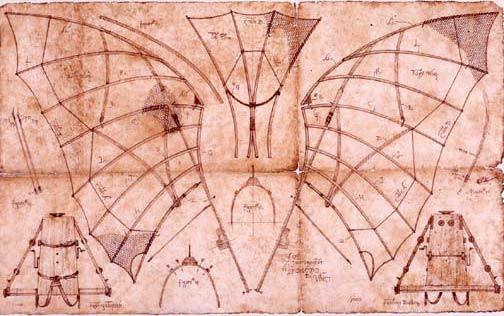
The concept of free flight can be traced back to ancient times, with early attempts at gliding recorded in various cultures. However, it wasn’t until the late 19th century that significant progress was made. German aviation pioneer Otto Lilienthal is often credited as the father of modern gliding. In the 1890s, Lilienthal made over 2,000 successful flights with his gliders, documenting his findings and inspiring future aviators and aeronautical engineers.
|
 |
The Birth of Hang Gliding
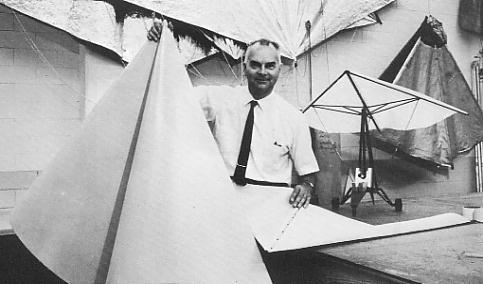
The modern hang gliding movement began in the 1960s, spurred by advancements in materials and design. Innovators like Francis Rogallo, who developed the flexible wing (initially intended for NASA’s space program), inspired a new generation of aviation enthusiasts. The Rogallo wing became the foundation for the first recreational hang gliders, which were lightweight, portable, and capable of launching from hills and cliffs. The 1970s saw hang gliding gain popularity worldwide, with pilots experimenting with design improvements that led to better performance and safety. This period also saw the formation of the first hang gliding clubs and associations, including the USHGA (United States Hang Gliding Association), which later became USHPA.
|
 |
The Rise of Paragliding
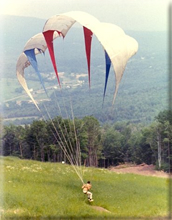
Paragliding, a sister sport to hang gliding, emerged in the 1980s. It evolved from parachuting, with modifications to parachute designs allowing for controlled gliding and soaring rather than just descent. French climbers are credited with the sport’s inception, as they sought ways to quickly descend from mountain peaks. The development of the ram-air wing, which could inflate and form an aerodynamic shape, revolutionized the sport. Throughout the 1980s and 1990s, paragliding rapidly gained popularity due to its
simplicity, accessibility, and the minimal gear required. Like hang gliding, paragliding communities and organizations grew, leading to standardized training, safety protocols, and competitions.
|
 |
Modern Free Flight
Today, free flight aviation encompasses a global community of enthusiasts, from weekend ridge soaring pilots to competitive athletes and professional instructors. Technological advancements have improved the safety, performance, and accessibility of both hang gliders and paragliders. Events like cross-country competitions and aerobatic displays showcase the skills and capabilities of modern pilots.
|
|
Risks of Free Flight
While paragliding and hang gliding offer unparalleled experiences of freedom and adventure, they also come with inherent risks that every pilot must understand and respect. Free flight activities take place in an uncontrolled environment where variables such as weather, terrain, and equipment play a significant role in safety. Finding a school or instructor to begin training is the first step in a continual education process to minimize the inherent risks of free flight.
⛅ Weather Conditions ⛅
Sudden changes in weather, including strong winds, turbulence, and thermal activity, can lead to challenging flight conditions. Pilots must have a deep understanding of meteorology and the ability to make informed decisions about where and when to fly.
💥 Collision Hazards 💥
Flying close to terrain and other obstacles can be dangerous if not approached with awareness and caution. Knowledge of how objects will affect wind patterns is essential to make good decisions about flight paths. Collisions with the ground or objects such as trees, power lines or other pilots are a significant risk.
🪂 Equipment Failure 🪂
Though rare, equipment failure can occur and result in loss of control. Regular maintenance and pre-flight inspections are essential to minimize the risk of malfunction during flight.
🧑✈️ Pilot Error 🧑✈️
Most accidents in free flight are attributed to pilot error, which can stem from inadequate training, poor judgment, or overestimating one’s abilities. Continuous education, experience, and a commitment to safety are crucial in reducing the likelihood of mistakes.
USHPA is dedicated to promoting safety through education, certification, and community support. By adhering to established safety protocols, maintaining a high level of awareness, and continuously improving skills, pilots can enjoy the thrill of free flight while minimizing the associated risks. Learn more about SAFETY.